ContactContact

Get in Touch

Fill out the form below and I'll get back to you within 24 hours.

Blog

Thoughts and insights shared on LinkedIn

It is really hard to do outreach if no one knows who you are.

Struggling with cold outreach? Discover how to leverage AI and personal branding to boost open rates and transform your B2B growth strategy.

Read moreShow less
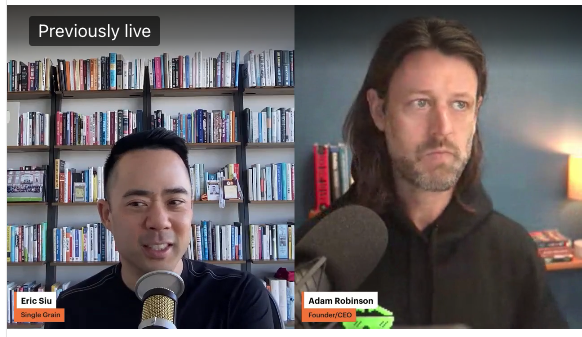
'It's really hard to do outreach, if no-one knows who you are.' This was a striking quote from Adam Robinson (no relation) in this excellent event: https://lnkd.in/e87Ng49t Adam's trifecta for B2B growth is: - Become a resource centre - Outreach - Retargeting Most AE tools give you lots of data, channels, sequencing, CRM integration and all that is really important. However the effect of outreach is multiplied if you are known and respected. What makes people open an email? Sender, subject line and pre-header text. There is a huge opportunity for AEs to make a massive difference by building their own personal brands. But you need a plan and a process. You need your own content strategy, marketing calendar, designer and copywriter, not to mention videographer. Crazy right? Well that's where AI can help. I'm working on all this for AEBuddy. Exciting times!

Voice AI is the quickest medium we have nowadays to communicate with technology

Discover why voice AI is the fastest way to bridge the gap between people and tech, from streamlining lead qualification to revolutionizing support.

Read moreShow less
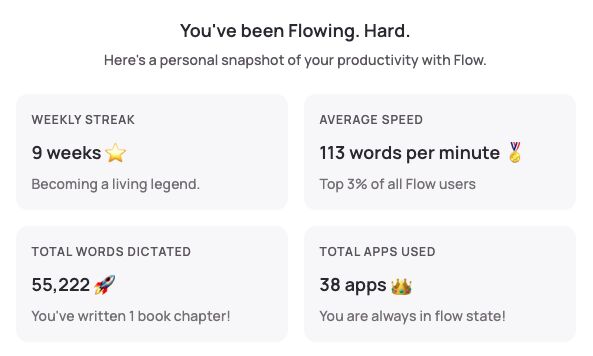
'Voice AI is the quickest medium we have nowadays to communicate with technology.' Let's think about this quote from Jannis Moore (from the 7th Nov edition of The n8n Masterclass podcast: 'Used cases for deploying voice agents in SMB and enterprise'). Voice is certainly faster than typing (on laptops and on phones). Look at my Wispr Flow stats from the last 9 weeks. I have spoken 55k words into my computer and phone. Mostly interacting with Claude, Lovable and Supabase. But, on the other hand, reading is faster than listening. This is why we like the fact that our phones can transcribe voice mail or voice notes, so we don't have to spend 3 minutes listening. Voice input (speaking) also allows you to read, organise and digest information as you speak, which you cannot really do whilst typing, so there's a form of multi-tasking efficiency with voice input. For example you can interpret your notes and images as you speak. Your words then become a format that is more compatible with technology. Voice AI agents can have the same access to LLMs and business processes as chat AI agents. In many cases they will be a faster interface for getting what we need than typing or clicking. More people have access to phones than laptops more of the time. What are the use cases for this huge voice AI efficiency gain when applied at scale? Jannis Moore discusses four opportunities in this podcast: 1. Lead reactivation 2. Lead qualification 3. Customer support 4. Appointment setting I struggle with the first one. We don't pick up the phone to actual real people any more, sometimes people that we know and like, so I find it a real stretch to believe that we will pick up the phone to a voice agent. The podcast host Dylan Watkins does gently push back on this by asking Moore if there is value for the lead in this interaction. Lead qualification has some merit. If I'm the lead, I have an interest here so I might have enough to spend time with your agent to get to the information or opportunity I'm after. Customer Support has huge potential efficiencies and quality improvements through the use of Voice AI. By replacing IVR systems with Voice AI we can satisfy customers much more quickly and at far lower cost. Once we are confident in the guardrails and observability processes, agents can also have access to business processes via MCP servers and actually change things, transact and make customers lives better. As a customer I do not mind talking to an agent if they can actually help. I want the help. I don't want to talk to a person if an agent can solve my problem more quickly. I was surprised that privacy and security were not mentioned in the podcast. It is not possible to launch these services without a robust privacy and security framework. I am very much looking forward to trying out Voice AI in real business scenarios. Exciting times! The podcast can be found here (7th Nov edition) https://lnkd.in/eDZi9YVF

AE Buddy - We want to be the Iron Man suit with endless patience that can help the AE

Meet your AI-powered co-pilot. Discover how AEBuddy handles deep research and ecosystem mapping so Account Executives can focus on closing deals.

Read moreShow less
I'm developing the value of AEBuddy. We are the Account Executive's Buddy. We have deep research capabilities, we have time. We can go away and monitor, we can do it iteratively. These are things that the account executive can't do at scale. We can also research topics that are discussed, we can find people related to those topics. We can research their ecosystem - who do they co-create with online? Who do they watch and react to? We want to be the Iron Man suit with endless patience that can help the AE. Horrible mixed metaphor but it covers two key aspects of what an AI-enabled buddy, assistant, team of assistants can offer. But what do the AEs need that would be useful? I feel like opening this up and saying: 'Give me tasks, tell me what you need!'

I'm thinking about voice strategy for https://aebuddy.pro/

Explore how AEBuddy is evolving with voice technology to turn solo brainstorming into a dynamic, hands-free conversation.

Read moreShow less
I'm thinking about voice strategy for https://aebuddy.pro/ - I was very impressed with https://elevenlabs.io/ when they demoed at the n8n meetup in London a couple of weeks ago. Many people are just more comfortable talking than writing. How could AEBuddy help by having an actual conversation? AEBuddy is a thinking partner as well as a process. It gives you angles, ways of approaching a topic that might be useful so that you can post something that reflects your own position and hopefully moves the conversation forward. That might be better done by voice rather than typing. I'm a big fan of Wispr Flow, I find it easier to get started on a document or a prompt if I can just speak my thoughts. With elevenlabs you can also use voice to kick off business processes. I would love to offer registration, onboarding or tone-of-voice input via the microphone as well. I'm also thinking that AEBuddy might offer encouragement too: On the technical side I'm investigating whether I need to build APIs or an MCP server for this. I'd love to hear thoughts or or examples of great voice interfaces.

Discover how a non-developer built a functional SaaS in two months

Discover how a non-developer built a functional SaaS in two months. See the AI tools and workflows making the age of the solo creator possible.

Read moreShow less
I have been putting some low code/no-code tools through their paces in preparing for and then building v1.0 of https://aebuddy.pro/ I'm astonished and thrilled by what is now possible. I am not a developer but I have worked with software development for the last 25 years. I feel like I do have the iron-man suit and can deliver so much more than I ever imagined. Even 12 months ago, what I have built in the last two months would have required a software architect, developers and a designer. The stack I have been working with is: - Lovable - for the front end - n8n - for data workflows - Supabase - for database as a service and edge functions - Claude - architect, prompt engineer, debugger - OpenAI API - Gemini API - Wispr flow - voice to text Lovable has a prompt interface and AI at its core. n8n now has a prompt-based interface and AI text-to-workflow builder (although it did not when I started working with it). Supabase has a very good AI assistant. However, I have found that the most productive method is to architect and plan with Claude and then delegate/execute with the other tools. Claude is where my Product Management happens. Claude then gives me prompts, javascript or SQL for the other tools and when things go wrong we debug together. I have been spending more time on the terminal and in the browser console than I ever have in my life. I have my first repo on Github. Progress is incredibly fast and the process feels all-consuming. My 'work companions' are skittish. They write a lot, very quickly. They can't wait to get writing. But they also get tired - 195,000 tokens is the context window-ish for a claude chat and when you reach the end of those (which can happen pretty quickly) it's game over and you need to start a fresh chat. Fresh chat means fresh context, so you have to spend the first 10 minutes forcing claude to re-read what we are doing. You then need to remember to start writing artifacts and continuation prompts before you get to the end of the context window. This is more important the longer you develop any one project. At times, I think I'm doing something really important, sometimes I fear I have been hoodwinked and this is just a great video game. The attention economy has worked out that I love building and so that's what it is making me do. In the end, I do believe in it because I have built a tool that functions and is there every day. However, now the real work starts: early adopter testing - is it valuable? Does it really solve your problem? That hasn't changed. I would never have got to this stage on my own, even a year ago. So it is the age of the ideas person, software is not a barrier. There will now be millions of us out there trying to find product/market fit. So that's today's task.