Discover how connecting Lovable builds to Claude via MCP unlocks a more natural, spontaneous way to interact with your data through chat.
Read moreShow less
Yesterday I connected up one of my lovable builds to Claude Desktop via MCP. It was actually incredibly easy. All I had to do was:
1. install Node.js on my Mac
2. make sure everything is secure
There you are. I'm chatting with my data. This particular lovable build also uses Gemini, which is part of Lovable Cloud, so in fact I have two chat interfaces that I can now use with my data. This is really very exciting because I truly believe that chat is going to be a major interface for the future, not just typing chat but speaking chat, which already is much the same thing if you're using Wispr Flow.
Why is this different? Fundamentally chatting is a different form of human interaction, a different mode and rhythm of thought. Up till now we've interacted with apps and data primarily visually, by looking at a screen and some kind of visual representation of data. To be able to talk with data, literally speaking out loud, is a completely new frontier and resonates with other parts of our evolutionary biology.
It's more spontaneous. It's more natural. It allows us to think in different ways. I use a musical analogy: it's the difference between singing whilst holding a piece of paper in front of you and reading the music and singing from memory. You're in a completely different psychological space in those two different modes.
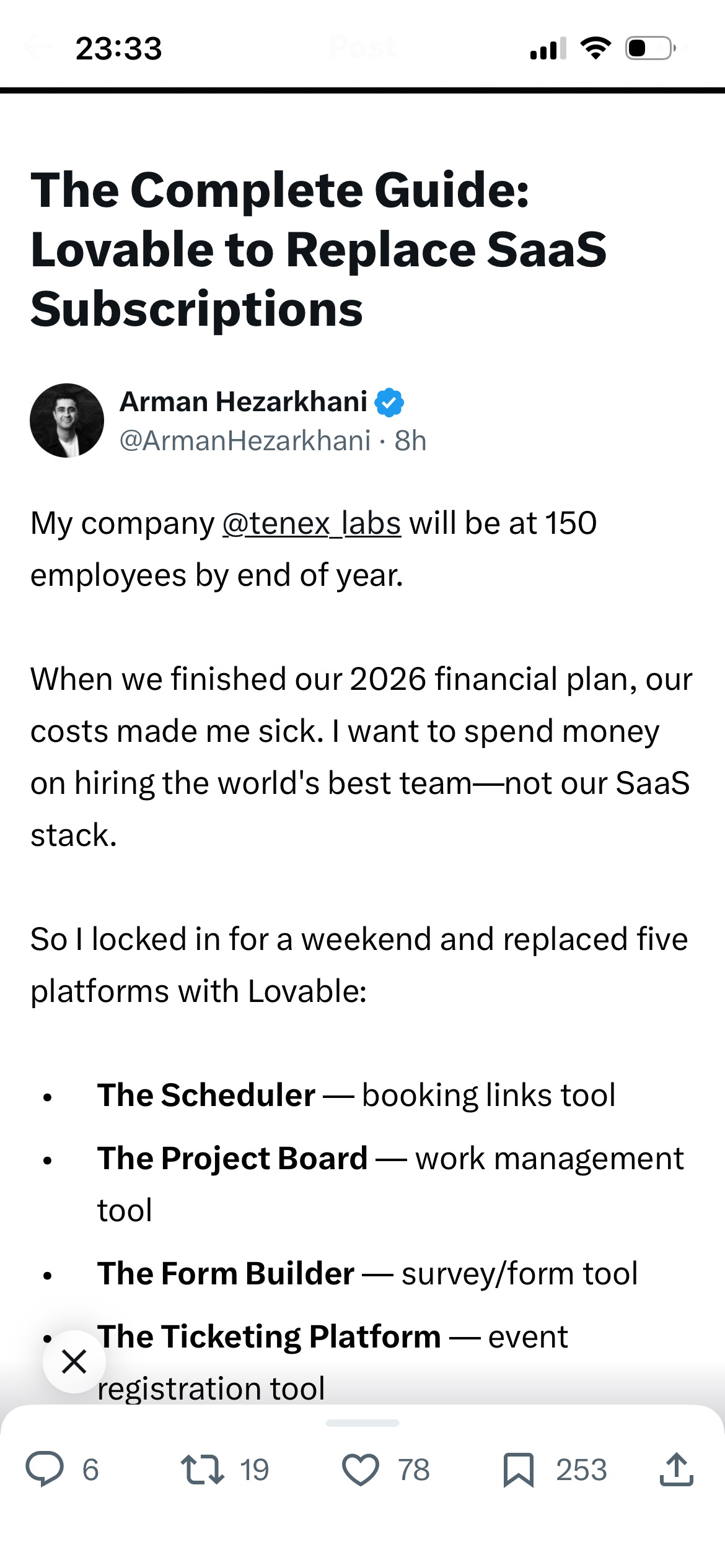
Stop paying for expensive SaaS subscriptions. Learn how to build your own custom tools in parallel to save thousands and boost productivity.
Read moreShow less
Save costs on your Saas tools by writing your own version!
I've decided to use my Lovable rollover credits bonanza deadline (I have to use up 200 credits today) to see if I can save myself some money as well as have fun. I'm currently programming tools to replace some of the software that I actually pay for on subscription. Specifically, I'm rebuilding a version of Eventbrite to handle ticket sales and event organisation. This could save me up to £500 a year, so it's well worth a day of my time. I'm also building a financial analysis tool.
I've discovered a new working method with Lovable as well. One of the things that is a little bit frustrating is that you have to wait whilst Lovable actually does the build, and then sometimes the builds need reworking, debugging, and they always need testing. There's a certain amount of dead time when you're building, and I've happily worked out that I can build two projects in parallel! When I have dead time on one project, I switch over to the other. Yes, I still need my coding guides, so I'm using Gemini for one project and Claude for the other to debate with Architect and keep us on track. This is now much more productive, and that's not even half of it.
AI-powered tools like Lovable are replacing entire tech teams. See how "vibe coding" lets new startups outpace legacy brands in hours, not weeks.
Read moreShow less
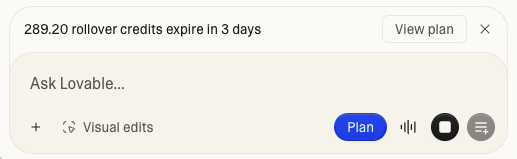
289.2 Lovable rollover credits expire in 3 days.... this feels like a challenge!
It's actually huge fun changing my mentality from 'how to use Lovable most credit-effectively' to how much can we build?
I have gone down the route of optimisation and polishing for one of my sites.
I went with this prompt in 'plan' mode:
How can we optimise this section and indeed the whole site for discovery by robot crawlers for search engines and, more importantly, now for deep research by AI LLMs?
Lovable came back with a 20 point action plan including:
Update index.html meta tags
Create sitemap.xml and enhance robots.txt
Create llms.txt files
Build SEOHead component with JSON-LD
Add SEOHead to all pages
Some of this is quite basic but llms.txt is new to me. I still marvel at the fact that 12 months ago I would have been implementing suggestions like this from my SEO agency and submitting Jira tickets to the tech team to get it done. Now both advice and action are in the same place.
If you are not building on Lovable, yes, most of the world is on a legacy website, then you are still going to have to submit a Jira ticket to get llms.txt files. How long before we see vibe coded replicas of legacy businesses just swapping in and winning because they can move so much faster?
AI agents are evolving from reactive tools into proactive workers. Discover the risks, rewards, and essential safety tips for local automation.
Read moreShow less
I am thinking about https://openclaw.ai/ the open source agent that you can install locally that will proactively manage and execute tasks on your local computer. This has been the buzz for the last three or four weeks.
We are at one of those turning points in our use of AI, we can move from interacting with passive, reactive tools to setting up systems that have agency and can make changes proactively. It is super exciting and frightening to think that you can install a worker that will do your work for you.
My personal experience of active agents with my tests on browsers like Perplexity's cursor is that it's alarming when your instructions can be misinterpreted and extremely dangerous to do anything on your personal or work computer. Like most people, my recommendation would be to set this up on a separate, clean server or PC. I see people are buying Mac minis for this, but there's not much point in setting up an agent like this in a vacuum. That is the safest thing to do, though.
I don't think we're anywhere near granting agents unsupervised access to our email inbox, files or more. The vast majority of us do not have the guardrails or monitoring, to do this safely right now. I'm really curious to see if there are any actual use cases for Open Claw out there. The only one I've seen is for tidying up your desktop.
Now, Claude Cowork, on the other hand, seems to be set up with guardrails, with restrictions in place that make it safer. You can limit which directory it can work in on your local computer. Cowork seems to unlock the magic of multitasking and stacking sequential tasks, which is undoubtedly huge.
See this post for a great starting point:
https://lnkd.in/dnjrmHUp
That being said, we are really moving into a new area, and the people who have an understanding of how to restrict and protect sensitive information and processes and keys from agents are other people who can be most adventurous.
Master the art of "Theme and Variations" to build a powerful personal brand. Learn how to repurpose your best ideas to drive consistent growth.
Read moreShow less
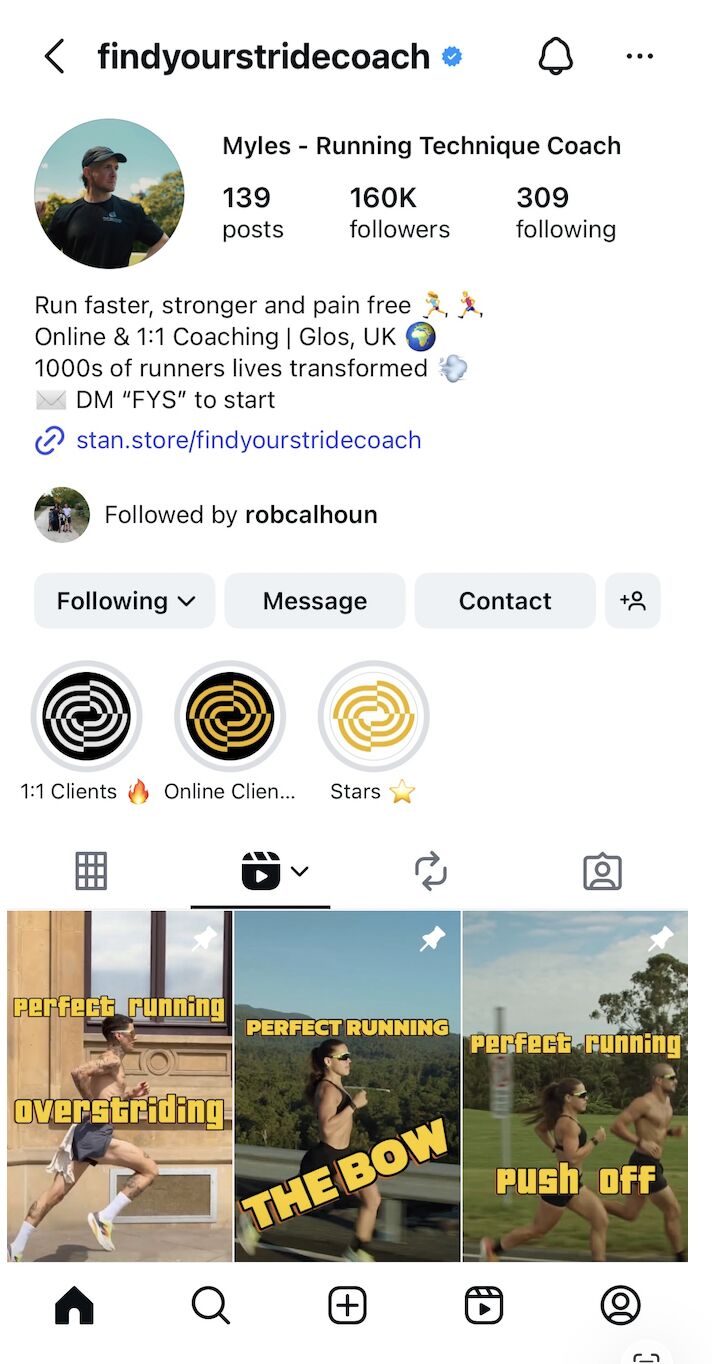
@findyourstridecoach on Instagram does a great job. It's a topic I've been mildly obsessed with for decades. He coaches people on which part of your foot you should use to push off with when you're running.
When you look at someone running, you can immediately see instinctively, without knowing how to analyze it, if they're a good runner. It just looks great when it works.
He has also a useful lesson in one of the personal branding skills that we need which is artful repetition, 'Theme and Variations'. If you look at his Instagram videos, you'll see they're all slightly different ways of addressing the same topic and they often reuse the same very good video clips.
So how can we use this in personal branding? It's hard to think about those different angles. We feel guilty that we're just putting the same thing out again. We need a method!
That's why I've created a section called 'Themes' in AE Buddy and the idea of the theme section is to allow you to riff on your key themes. This means you can show up consistently for people that follow you regularly but also whenever somebody finds you they'll know one of your core strengths as well.
Now where are those running shoes?